
Throwback 2019| Illicit Inspiration - Money Laundering Vancouver Style.
Once upon a time I lived in Vancouver. It was Spring 2019 and money laundering was the topic du jour! This is when I first started blogging, and I am an emotional, nostalgic sort so I wanted to include these articles on the new website, for posterity. And for convenience, all 5 parts in once place. It remains an interesting read if you’re into that kind of thing. As Vancouver has boomed over the last 7 years I will follow up to this article with a focus on the art market…will I like what I see!?
Hello money laundering junkies and financial crime enthusiasts, before I get into it any proper posts, I just wanted to set the scene. It's May 2019, a sunny afternoon in Vancouver, British Columbia, Canada. This idyllic west coast town busy and vibrant, set to and surrounded by natures tune with mountains on the northern horizon and the sea to the west, forests and lakes and all that green goodness. It's a fantastic place to live, do stuff and chill out. Unfortunately I'm just visiting, it's been 2 weeks so far and it's been expensive, inspiring and interesting. The same as last time, I was here for 2 months in 2016, it was great then too. Back then though I was quite busy enjoying the chill, the lifestyle and getting away from work, and I failed to take note of what was happening in the background, the rustle of money, that dirty cash money that seems to be ever-present in all corners of the world, especially the pretty ones. The key AML points in this lovely yet troubled town are casino gaming and the real estate/luxury markets, it’s a classic case of the good, the bad and the dirty. Be clear, be confident and don’t overthink it. The beauty of your story is that it’s going to continue to evolve and your site can evolve with it. Your goal should be to make it feel right for right now. Later will take care of itself. It always does.
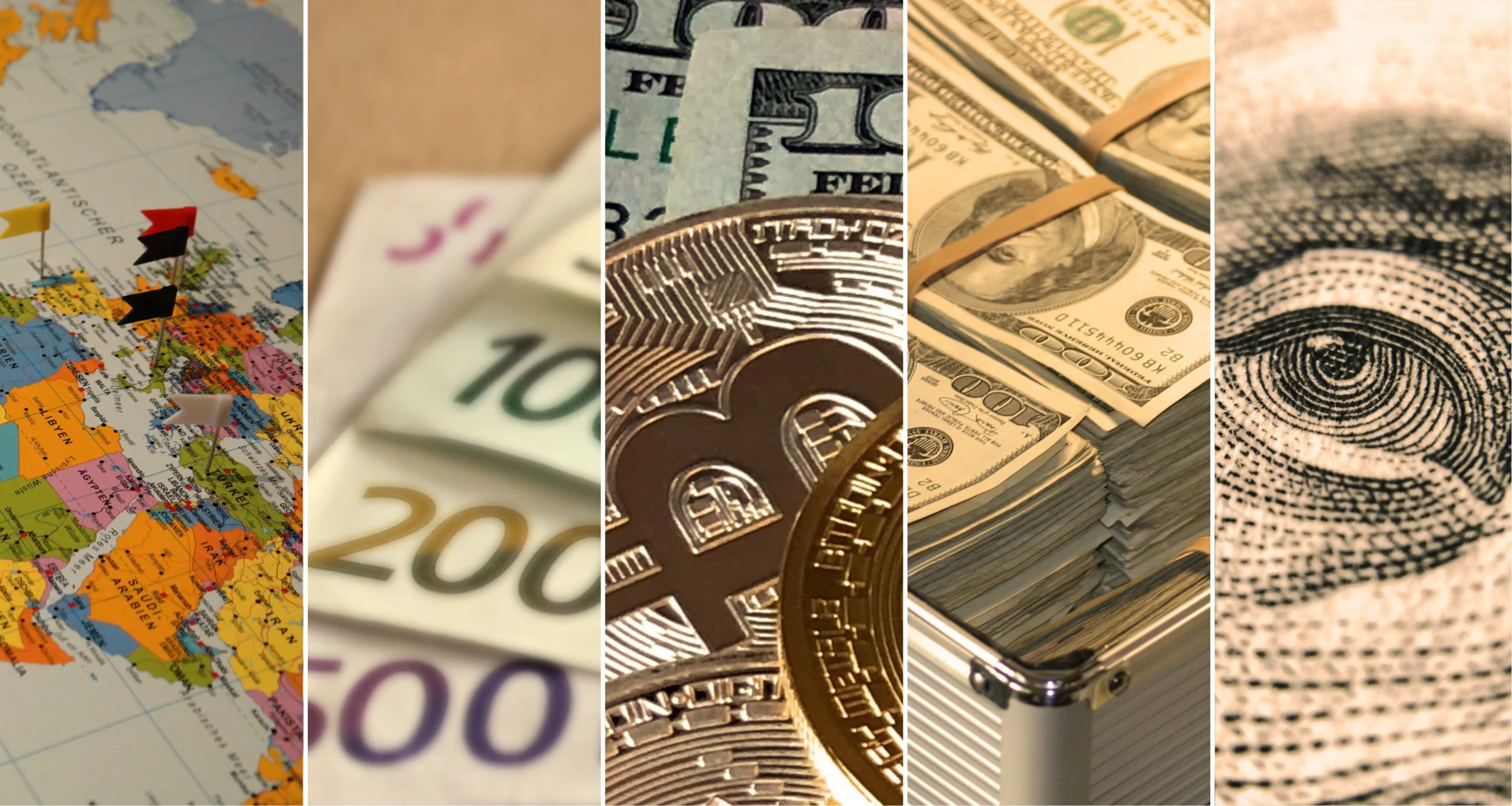
Dirty money is everywhere, especially Vancouver, apparently...
This pretty but complex picture interests me indubitably, as I have previously worked on the front line in casino surveillance/compliance and recently in a number of financial institutions covered AML, KYC, and Sanctions. It’s a hot topic over here and while I was aware of the situation, I wasn’t that interested in it, but being here got me to pay attention, read into it, and understanding the problems made me want to dig deeper. I’m (un)fortunate to have an understanding of the internal workings and requirements of a casino AML/compliance ops and financial system AML controls like transaction monitoring and due diligence.
Anyway, the hills of Vancouver are alive with the sound of money. It’s just a booming economy, funds flowing back and forth, supply and demand and all of that, but it’s the source of funds satisfying the demand of the supply (does that make sense) that has created interest and sporadic uproar, the routes taken by said funds that end up in luxury real estate have raised some Canadian eyebrows. It’s always lingering in the background and often in the foreground (as per todays Starmetro below), in march 2018 a Casino/Gaming focused money laundering report was released to huge effect (link below), noting the extent of casinos as facilitators of potentially illicit funds, the lack of and barriers to enforcement, and various recommendations on improvement. A second report focusing on real estate and luxury cars is on the way, a snippet of which was released earlier this week.
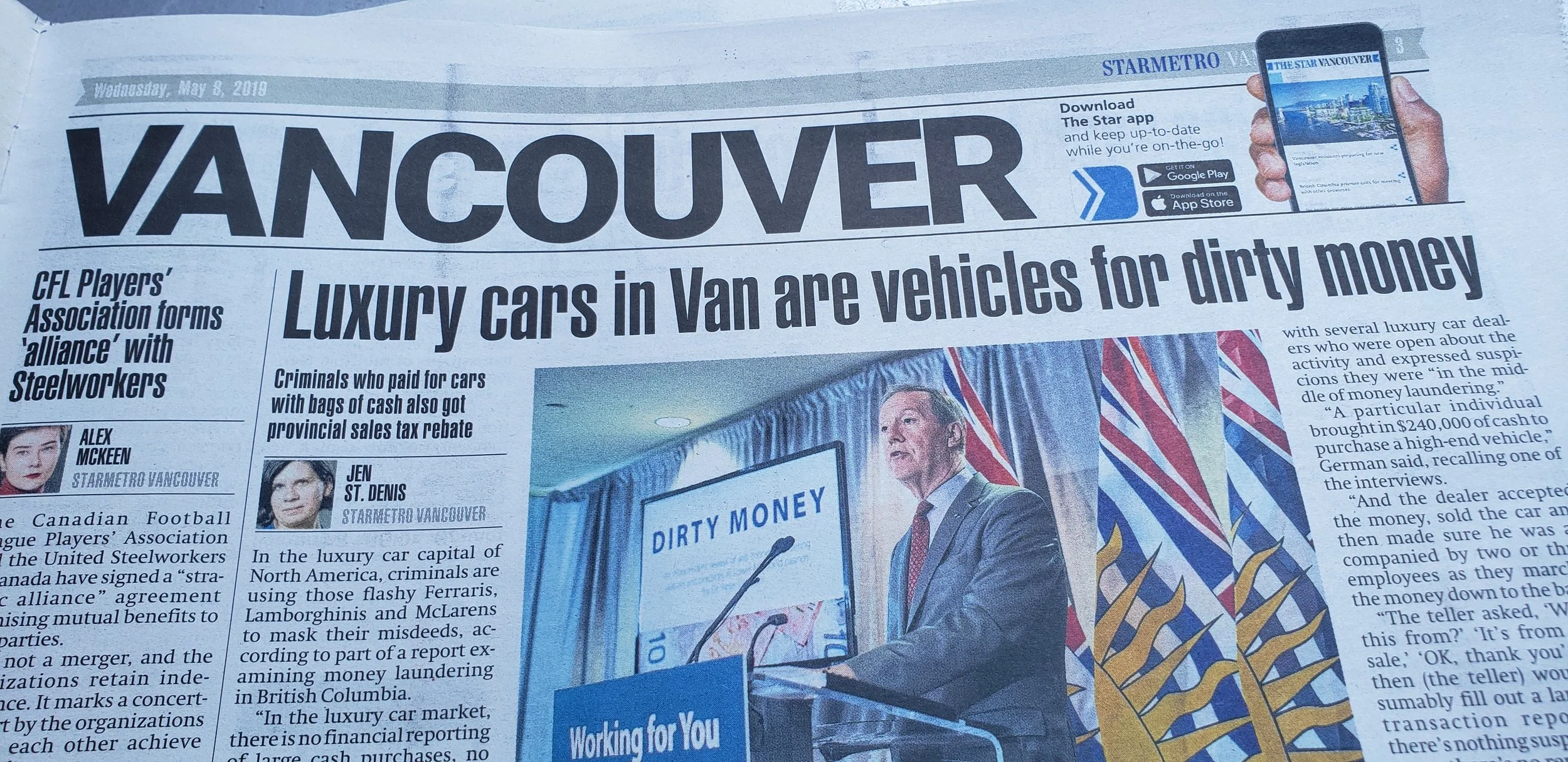
Nice pun, unbelievable content! - Links to similar article - if StarMetro had the story on their website I would link to it!
The reports are harsh, no-nonsense stuff, though there is a fair bit of nonsense in what has actually been going on over the last decade. But we know it’s not just Vancouver, as is so often the case around the world, the regulation is there but the budget isn’t, the enforcement isn’t and the bureaucracy is stifling. I’d like to say it’s shocking, most of it isn’t but actually some of it is, specifically the operational and oversight blunders in the casinos. So over the next couple of weeks I’ll be sticking my nose in, and taking a big whiff of what’s been festering in Vancouvers Moneyland sewers - stay tuned.
PART 1 - Money Laundering Vancouver Style
As I look out onto downtown Vancouver from the 16th floor of one of the many skyscrapers onto at least a dozen others, I see why it is sometimes called the city of glass. Here I am supposed to say something clever about windows, blinds and the lack of transparency being in sync with the state of anti-financial crime oversight and reporting. I couldn’t think of anything witty, give me a break, I’m new though this situation is not.
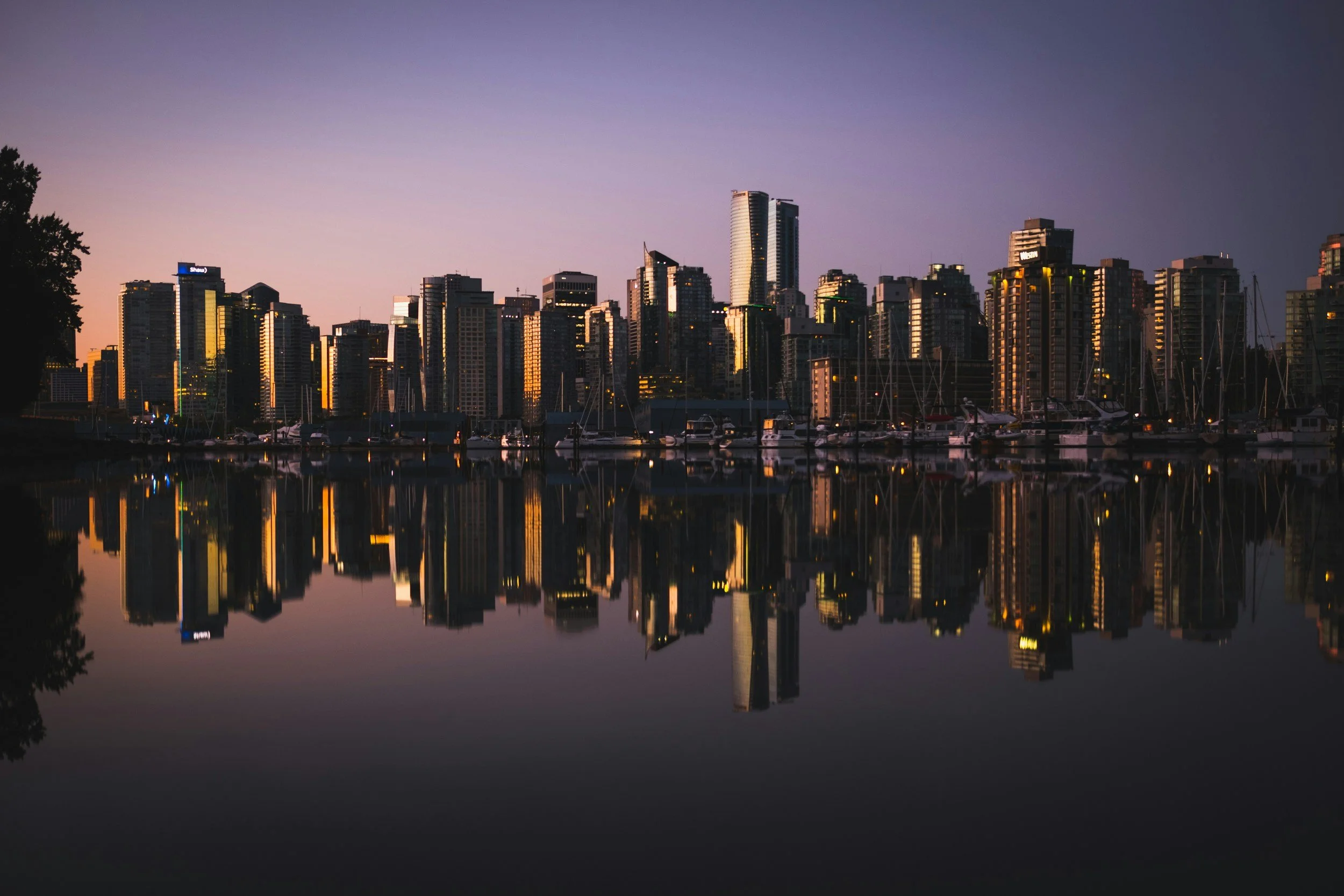
| Wherever there are yachts in the shadow of a skyscraper there is a potential connection to illicit funds.
Littered across the skyline lie a number of building projects in process, some yet underground, many low, some high, aesthetically pleasing and not, others over-towering the blocks laid before them. Amongst this economic bloom and bustle that has been on the up for a while, framed by the mountains and sun glistening off the sea there is a dark and ever present undertone, the one we get out of bed in the morning for, the one that I am reminded about every time a McLaren or Lamborghini roars down the road - that dirty money, that money-washing machine. Wherever there are yachts in the shadow of a skyscraper there is a potential connection to illicit funds, underground dark money or Moneyland to use the term coined by the author and journalist Oliver Bullough, and also the title of his superb book. Mr Bullough did not venture to Vancouver in his varied and wonderfully disturbing travels but as I am here and have been drawn in by the media coverage, which is good to see (and obviously not), I wanted to have a proper look so I got involved in a little know your city action.
The money laundering shenanigans in Metro Vancouver, British Columbia, Canada have caused a stir over the last few years. It’s been one thing after the other in an expansive ongoing and public deliberation, there are hundreds of comments posted after news articles, one of them brought to light that Vancouver, B.C. is known as Vancouver, Bring Cash. There are big stories relating to shiny and terrible things like luxury real estate, exotic automobiles, drug trafficking, organised crime and casino resorts. It’s evident for many that things aren’t quite right, and rarely is financial crime in the spotlight so markedly when not related to a specific scandal. In the case of Vancouver, it’s the whole economic landscape in question - the scandal is money laundering. This exposure is vast and involves a lack of enforcement of regulation, it encompasses the conversation around the housing market and how the influx of foreign funds over the last decade or two has caused prices to skyrocket - the big question being about the legitimacy of much of that money with source of funds due diligence not being part of the discussion for a significant time.
Is Vancouver, like London, a dodgy real estate hotspot, a drug and dirty money transit point, a long time gamblers town with a diverse population?
Vancouver has long been known for having problems with money laundering and financial crime. It is a port city, though not large it’s metro/greater and lowland areas cover a considerable area, 2,700km2, and houses around 2.5 million people, in comparison Greater London is 1569km2 with around 9 million inhabitants (Source: Google/Wikipedia). Being a massive port city, we won’t go into the subtleties of using shipping for illicit transfer of value, trade based money laundering and all that (cue Lionel Richie). The authorities haven’t even got into that yet as far as I can tell but I haven’t started digging yet. There was mention of export of luxury cars being used to claim massive tax rebates, and the potential for the actual purchases being made with dirty money - nice work if you can get it. These reports are a good (though awfully late) start, they have to realise that this problem is bigger than the casinos and real estate, it’s the whole bento box that is rotten not just the sushi. Great sushi in Vancouver by the way.
Is Vancouver, like London, a dodgy real estate hotspot, a drug and dirty money transit point, a long time gambling loving town with a diverse population? Well, yes it is. On the brighter side, Metro Vancouver is spacious and airy and beautiful, framed by the sea and mountains, and London is not. It has a serious problem with fentanyl, the synthetic opioid, and scourge of many of an addict, but dealers/gangs are making a lot of money from that and the usual suspects meth, cocaine and heroin - the problem is evident in the streets of downtown Vancouver - those proceeds of crime then need to be cleaned. Casinos have always been a cash heavy potential entry point for dirty money, and this seems to have been the case in Vancouver for some time. Once cleaned it allegedly goes into real estate projects, luxury cars and goods. It’s a neat little method, that placement, layering and integration model perfected. And alongside that there is that overseas capital from unknown sources, maybe transnational crime groups send money to Vancouver on ships to clean it, who knows? One guy knows some stuff, Peter German.

Image : Kaysha
The thing about Casinos.
In June 2018 a damning report of BC casinos in relation to financial crime controls and compliance was unleashed;- DIRTY MONEY, An Independent Review of Money Laundering in Lower Mainland Casinos conducted for the Attorney General of British Columbia - https://news.gov.bc.ca/files/Gaming_Final_Report.pdf. Ordered by the government and compiled by Peter German & Associates, Mr German is a ex-RCMP (Royal Canadian Mounted Police) deputy commissioner and now lawyer. The report is comprehensive, detailed and brutally scathing in a polite Canadian kind of way, and has a lot to say about the British Columbia Lottery Commission (BCLC from hereon). Part two of that report was released last week, DIRTY MONEY - PART 2; Turning the Tide - An Independent Review of Money Laundering in B.C. Real Estate, Luxury Vehicle Sales & Horse Racing - I’ll deal with that later.
The Dirty Money (Part 1) report goes deep into the dealings of a number of local casinos, their daily operating procedures, the policies in place, the regulators and authorities and a number of examples that sound like they are straight of the days of old, when gangsters had tommy guns and wads of cash to clean. Unfortunately some of these laundering events are less than 5 years old and it’s shocking from my perspective (I know I’m late to the BC party) that a reasonably established gaming industry in a post-industrialised economy can so blatantly be used for money laundering in a country with considerable controls and legislation in place. It seems that though the skyscrapers are going up, there hasn’t been much other progress, the only thing progressive, as is so often the case, has been the ingenuity of the launderers, usually though they have to adjust or change their methodology, in the case of Vancouver, they didn’t need to once they’d got a solid system in place. Now I’ve got that out of my system, I’ll go over some points that were of interest to me.
Check this one out, “In a 2000 report to the Province, J. Peter Meekison referred to the mandate of BCLC being “to maximize revenues for the province” and referred to “its obvious role in promoting its activities”. In fiscal year 2016-17, over $907 million from $1.339 billion net income generated by gambling went into health care, education and community initiatives. By comparison, the much larger gaming industry in Nevada produced $900 million in revenue for the State in 2015, based on an 8 to 15% fee which it collects from casino operators. BCLC’s average share of casino revenue is 65%.” Anyone see an issue here? I guess the question is, how much would a real push on reducing laundering effect revenues? Only one way to find out enforce your regulations, which they have done to some extent and unsurprisingly casinos have reported a hit on takings - well fancy that. I will speculate and say that there may be people at the top who don’t appreciate it when revenue is reduced just because of some harmless money laundering and capital flight!
There was an article (3) recently stating revenue in BC casinos is down due to the AML controls put in place since last year. It’s obvious that the casinos have become bloated and greedy. They are probably being quite unrealistic about the legit revenue they might expect to have in the absence of the dirty cash flowing through their drop boxes. Some casinos and their backers are losing money, struggling with financing etc, do they want people to feel sorry for them? They made enough dirty money, time to pay the piper. Of course the main issue here is that hundreds of regular people are employed by these companies and it’s terrible situation but that will, or likely has been leveraged by a politician or lobbyist to try and reduce collateral damage from AML reform in the form job losses. It’s not easy situation to deal with, but they have to cut the head off the snake now they’ve got it it their sights. If it gets loose post this round of media attention, there will be no end to this saga.
Time for some speculation, if government taxes on casino revenues are heavy, they make a lot of money, right? Controls in casinos have been strict on paper but lax on enforcement, they may be a connection there, maybe not. The BCLCs mandate to quote the report is, "BCLC’s primary goal is to maximize the revenue which government obtains from gaming”, and wait for it, to quote the report again, "FinTRAC requires that entities responsible for the conduct and management of gaming submit transactional reports to it. The curious result in British Columbia is that BCLC, and not the casino operators, is tasked by the federal government with reporting under the money laundering legislation. BCLC has embraced this role and views itself as the gold standard for Anti-Money Laundering (AML) compliance in Canada’s casino industry.”
So there you have it, the perfect nonsense, and despite BCLC clashing with FinTRAC who levied a heavy fine on them in 2010 (settled in 2016) the arrangement and performance remains the same. Can the entity in charge of maximising revenue, effectively enforce a precedent which by its nature, in this context, is likely to be revenue-limiting? This is the kind of system that can work in theory but in reality there are too many variables, conflicts of interest and delicate balances that have to be met, compromises that can’t be made when it comes to making money. In the casino environment, the compliance vs gaming battle will rage on, but with this type of arrangement maybe it can be more easily resolved or reconciled, if all the control is in one place maybe it can be managed more efficiently, if the will is there, maybe. There is always someone at the top of the chain whose sole priority is making money, they have the control and power to make changes but their job is to make as much money as possible (generally speaking, for the shareholders etc, huzzah!). Of course this is all just my opinion, no accusations, just observation of true facts.
In addition, for a developed gaming industry there are some curious oversights in operational diligence (that may have been sorted now) which seem strange. One that stood out was the tracking of high value chips, it is one of the most basic things to track high value chips in play, counting the chips at the start of a shift and at the end to ascertain if any were missing. It wasn’t unusual for clients to walk out with chips, but it was usually regulars, they’d play them the next time they were in. If big players were in, and extra high denomination chips were issues to the tables, they would be tracked. If there were any big deviations, numbers would be double checked and player tracking would pick up who has the chips. This could also be checked via CCTV to confirm, player X had these chips at this time, didn’t cash them out when she left etc. From what I gather, and I find it hard to believe, this wasn’t being done properly in BC casinos leading to a large deficit and the potential for chips being used as currency in drug deals became a concern/possibility. This is a good idea from a criminal point of view but is outrageous from a casino compliance perspective. To allow a variance of millions of dollars before taking action is even more bonkers - maybe I’m mistaken there but that’s how I read it. I worked in a few casinos, one at the time being the largest in the UK, it was very busy and did good business - this could never have happened without a conspiracy involving 50%+ of the staff, I guess sometimes the conspiracy just has to be that nobody says anything - just saying.
What about the Chinese connection?
From my experience and understanding, in relation to casinos back home in the UK and in Canada there is often a Chinese client base, which is quite usual. In Chinese culture and life, at home and for diaspora around the world, gambling is a leisure pastime, they enjoy it, spend a lot of time and money doing it. Usually they are fun, in control, legit and without cause for concern, however many of them own cash businesses so you have to consider that side of it. If there are a lot of Chinese people living in an area, then the casino may well have a lot of Chinese clientele, the casinos will often cater to them and everyone is happy.
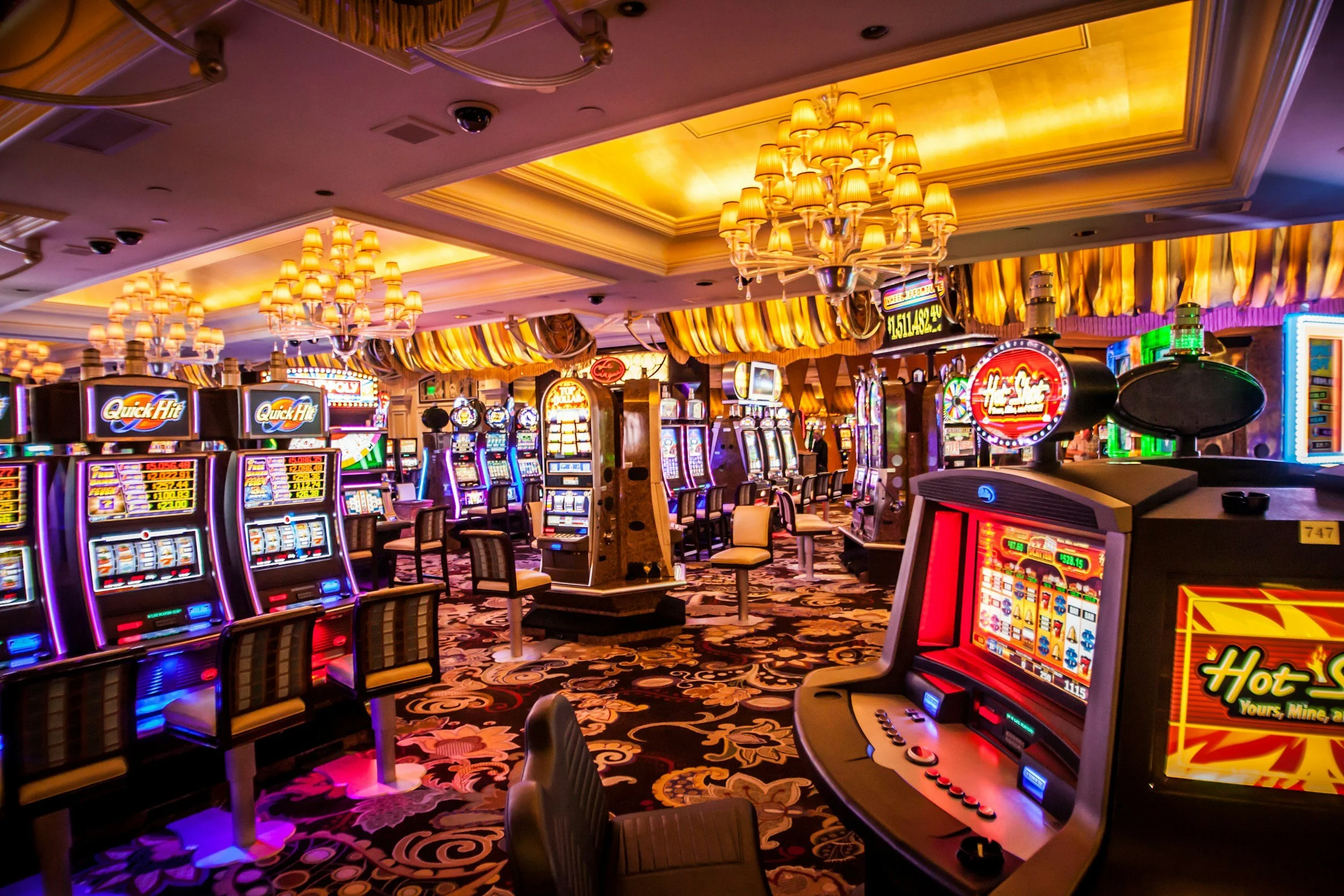
Unfortunately there are always party-poopers spoiling the fun, seeing opportunity to launder, and back in the days there was probably (definitely) not much enforcement going on to discourage criminality, hell they probably encouraged the business. If we are kind we can say the management didn’t make the crime connection, but what is more likely is that there was some wilful blindness in play, it happens when seeing the cash come over in wheelbarrows. The Vancouver model of money laundering took advantage of this stereotype and bias by using seemingly regular casino goers to launder cash in the form of loans issued to them in dirty money. On the surface it’s kind of like smurfing, where the money is split and enters the financial system in manageable chunks via different individuals.
There has been some controversy over the pointing of the pointy stick of blame towards immigrants (so what’s new), specifically Chinese in relation to capital flight (illegal and not), gang related illicit funds or laundering schemes. The fact is that metro Vancouver has had a high immigration rate, with 40.8% of the population being immigrants (2016 figures - 2). Another fact is the investor visa/residency cost is relatively low in relation to other western powers. The origins of casino gaming in the province and the participation of the Chinese diaspora is a hot topic that I won’t go into, suffice to say, the negative links are probably warranted to an extent given the information in the report (results of investigation examples and criminals caught). In addition, as the 1st Dirty Money report states, much of the laundered funds will be generated in Canada, by services and goods provided by organised crime, i.e. illegal drugs, counterfeit products and stolen property.
Of course, if criminals from anywhere are using a particular sector or industry to launder money it’s the responsibility of the authorities and regulators to deal with it, and if it’s a casino to literally not deal to them. It is easy to lay the blame, but if the controls aren’t in place then criminals will take advantage, the origin of the money is a separate battle to be fought. If the facilitators are ready and able to move the money, they will move it, but there has to be a reason to move it to a particular place, and that reason is always going to be easy access to the global financial system. If that variable is removed, then the dirty money is harder to clean and that is the whole point of AML legislation and the fine work of the Financial Action Task Force (FATF) in this day and age.
In a way Vancouver has had the opportunity to beat the market to the punch when dealing with Chinese money. They have been aware of the issues for a long time, have had an influx for years of people and money, encouraging the investment but failing to create a precedent and apply appropriate due diligence. Now and recently the rest of the world sees increasing investment from China, the government (Belt and Road initiative etc) and huge private companies making an impact on global finance are being scrutinised just like everyone else, and there is a somewhat strained but now common acceptance of AML/KYC requirements the world over. Sure there may always be friction from some, it can be inconvenient, but on the whole it is understood and accepted. Unless you have something to hide. There can be no excuses when it comes to the state of AML affairs in BC, it’s been what one might call an omnishambles, one of my favourite new words.
With a purge of corruption in China, and the embrace of technology without the concerns for privacy seen in the west (whether that’s good or bad or a choice or not I can’t comment) we are and will continue to see a shift in availability of personal information. Despite the method and regime, there is a win for transparency from certain angles. Having dealt with Chinese companies over the past few years both state owned and otherwise, there is healthy compliance with due diligence requests, which adds to the idea that those who don’t want to share have a good (bad) reason not to. It is fair to say, if the government lead the way then the private sector will fall in line. In terms of new economic powerhouses, there is a hell of a lot of money in China, India and elsewhere looking for investment and opportunity across the world, only a fraction of it is dirty, that fraction is still a huge amount. Controls on funds coming out of China are focused on cash withdrawals and transfers, there seems to be little limit or control in the use of credit cards. I have digressed a bit, but the point is the KYC side of this won’t be the problem it would have been 5 years ago - so that isn’t an acceptable excuse. The lack of compliance with law can be blamed on the lack of effort to enforce compliance.
How to get ahead of the criminals?
How about this for starters, don’t tighten the reins too much for now and keep that dirty money coming in. With that dirty money you create an AML budget to recruit, train and strengthen AML compliance staff. Once the new controls and team are ready to go, you deploy simultaneous national countermeasures, a strategic attack on the bad guys. At the same time, the government who rely on the dirty money at the top of the chain need to adjust their budget and find a new legal source of income. I don’t know maybe increase the investor residency visa thresholds, and apply a heavier tax on sales where funds are generated abroad. Just an idea.
More seriously, in terms of a deterrents and ways forward, the first is to create policies and controls in line with threat vectors and real requirements, and then make sure they are implemented. KYC on clients should take a risk-based approach as banks do. There should be a risk strategy in place, and clients should be designated risk ratings as per a set of determinative parameters within a fixed risk assessment framework as they are in banks and financial institutions. They may have this already, but if they don’t, there you go. That one’s a freebie.
A more drastic approach is that of cashless casinos. In New Zealand (1) they have been a success with other places taking the same approach. All transactions being carried out on membership cards that are pre-loaded under a strict policy and monitored appropriately - no cash on site at all. That’s quite a monumental change to make. The downsides are that for regular gamblers there is a tangible satisfaction in receiving your winnings in cash, it is part of the fun and in some ways allows a kind of self-regulation, seeing the cash lost can be an important buffer to going over-board. Also that older gamers may be put off by the technology aspect and go elsewhere. There are a number of key customer retention points here relating to the experience of gambling in casinos, or playing. Saying that, there are more machines in casinos these days and many of those do not take cash. When/if the cash drop disappears and revenues fall, the difference in figures may tell us a lot about what was happening.
Then there will be the inevitable creative criminals who will find ways to get the money into the casinos, but I can’t see how they would easily or as effectively circumvent a cashless system to operate at the same level as a cash drop system. Sure they could fund the loans into bank accounts directly rather than cash, but the whole point of this system was the issue of getting cash into the system in the first place, they would need a lot of smurfs, and some serious convolution to avoid transaction monitoring thresholds and triggers - if that is a thing in Canada, I haven’t checked. Jokes aside, I haven’t seen any reports into the efficacy of banking due diligence and transaction monitoring but in terms of the reporting to FINTRAC the numbers are high, not sure what they’re doing from there though. If casinos lock the door, the onus is with the banks and they should already have robust suitable framework and controls in place. At this point I wonder if they have - all things considered? I feel Dirty Money - Part 3 coming to a website near you.
There is a gap in relation to the facilitators of ML, a huge spanner in the works is the fact that lawyers are not covered under ML reporting requirements, meaning that client/trust accounts are probably used like a junkies needle injecting that dirty money into the Canadian economy. While this is a jumbo elephant sized oversight, its easy to point fingers, it is notaries in BC that are the real estate facilitators of choice and they are covered by AML regs - not that they are reporting. The UK requires lawyers to report, SAR and the rest of it, the fact is (4) that this isn’t actually happening as it should. It’s true some is better than none, but there are no real excuses when it’s the law - these lawyers often just take the law into their own hands, outrageous behaviour.
When there is money to be made, concessions, creativity and greed compromise the rule of law, loopholes are found and exploited. But sometimes loopholes aren’t required. In this case the origins of the booming real estate market are a little more complex. The money involved is seen to come from legal and illegal sources from overseas and not. A key point here is that wealth generated outside of Canada is being used to fund extravagant lifestyles in Canada - it’s not all dirty money but it’s a perfect home for it.
Another key point which has enhanced the profile of money laundering and allowed the public to relate and take action is that houses are snapped up but the income hasn’t been taxed in Canada, that creates an imbalance in the economy, prices have gone up due to demand but wages haven’t, as the demand is not funded by the domestic economy. It really is a broken system, I’ll get into the real estate side of things in another post in line with report 2.
Now is the time for Vancouver to get with the program, if it misses the window and doesn’t clamp down with authority, it will become an even greater mountain to climb - they have enough mountains (real ones), they don’t need another. Their AML system has been described as stuck, and it is. In line with the next German report and the global move to embrace and improve AML standards - it’s a tough gig, but they have to make changes as now we are seeing through the cracks in the reflective facade of the city of glass, they need to make sure those windows are two way or shatter them before they are shuttered further.
PART 2 - Money Laundering Vancouver Style - Houses, Horses & Lamborghinis.
Well back to beautiful BC and the city of Vancouver, oh that's British Columbia to you and me, or Bring Cash to the bad guys. I hear the weather has been glorious but haven’t felt the sun since I fell down the dirty rabbit-hole, I’m still wandering around the warrens of Vancouvers Moneyland - in a Gucci tracksuit naturally. Disclaimer, I'm going to omit the horses as it's not particularly interesting or as important in the grand scheme as the other two sectors at play, nothing against horses I just haven't seen any blinged out ones as I have houses and cars.
The second report was release last week and has a long and meaningful title - DIRTY MONEY - PART 2; Turning the Tide - An Independent Review of Money Laundering in B.C. Real Estate, Luxury Vehicle Sales & Horse Racing’. Again it’s comprehensive and interesting, shocking, enlightening and fascinating in equal measure, a job well done and a very necessary one. It’s hard to imagine drastic change not taking place after such information is brought to light, but easy to let it go when it doesn’t happen, sometimes money talks and regulation walks, maybe that’s the way BC is, and is meant to be. Maybe that’s its purpose, what it’s here for besides its natural beauty - to provide balance, good and bad, pretty and ugly. Hopefully not, but it's got a long way to go to get clean.
| “Vancouver: $560,000 and 95 kilos of coke. Winnipeg: $275,000 and 48 kilos. Toronto: $2 million and 150 kilos...”
The Canadian nexus to global organised crime is deep-rooted and settled, with organisations that are globally known, notorious and scary being heavily influential and prominent all over Canada. The Chinese Triads are a given in the scope of things as we have seen, but I’m talking about the Sinaloa Cartel, El Chapo and his boys have been running amuck in North America for a while and it seems Canada has been a buyer of choice for these Narcos. Then you have super sanctioned nation of Iran and their criminal representatives in the extended cohort alongside motorcycle and regular gangs. It’s quite the scene, and quite a lot of dirty money that links these Transnational Criminal Organisations (TCOs). It’s said that money is the ‘golden thread’ that is the link between banks and TCOs, but I call it a ‘dirt string’ obviously.
Certain details in report 2 - I believe sourced solely from a book, written by the lead Drug Enforcement Administration (DEA) El Chapo investigator, Andrew Hogan (1) - are eye-opening and smack you across the face with the real connection to the cartels and their activity; “Vancouver: $560,000 and 95 kilos of coke. Winnipeg: $275,000 and 48 kilos. Toronto: $2 million and 150 kilos...” It’s business as usual for drug traffickers around the world, but adding detail like this to the bigger picture is key, as that’s where devil is, literally in this case. That stock-take of drug takings in Canadian cities was created by a 22 year old individual “who was headquartered in Vancouver, allegedly enrolled at a private college, and living in a luxury loft apartment.” Referred to as a 'Narco-junior', no doubt he also has a nice car at his disposal and there are many more like him.
So the next series of Narcos on Netflix might be set in Vancouver, where drug money is rife, laundering is prolific, Lamborghnis are everywhere and all is doomed. Are there industries in Vancouver creating revenues that can be kept out of the dirty money conversation? Let's speculate. Fishing, but they might transport bags of money. Retail - coffee shops and restaurants, they might be funded by dirty money. Nail salons, massage studios, and brothels (legal in Van) known as fronts for criminal activity. I guess there’s a big film and TV production industry, corrupt and lacking equality, users of drugs maybe but a haven for money laundering, erm, maybe. This was very evident recently when Jho Low of 1MDB scandal infamy defenestrated the idea of Hollywood just telling the dirty money stories (2), when it became part of one. It is now known that the dirty money stolen from the Malaysian 1MDB investment fund was used to fund the Wolf of Wall Street amongst other things. It's the glitz and glamour, the luxury lifestyle that criminals often want to buy their way into, they just want to be loved and important - don't we all. Anyway we’ll put that aside for now as minor and move down to ground zero.
Cars as vehicles for money laundering.
I pinched the idea for the title from the Starmetro on the the same subject, it’s obvious but it’s a cracker. I believe Vancouver is known as the city with the highest rate of exotic/supercar ownership in North America, it was official at one point but I can’t find the article, can’t see how it would have changed - anyway, trust me I’m a blogger now.
The conversation has continued and escalated in the media with the BC regional finance minister, and the once almighty Prime minister of Canada sharing their opinions and advice. Like I said in part 1, this movement has traction and the government, both provincial and national need to take deliberate and significant action.
| “…gangsters bringing bags of money into dealerships to purchase cars. The dealers then had to transport that cash to their bank, where it was accepted without hesitation.”
What has part 2 brought to light? More dirty money of course, quite troubling examples of what has been going on in the Moneyland of Metro Vancouver. We knew it was happening, but it’s kind of bewildering when you hear the stories from report 2; “We heard stories from dealers, who described gangsters bringing bags of money into dealerships to purchase cars. The dealers then had to transport that cash to their bank, where it was accepted without hesitation. One dealer described large cash purchases occurring on a monthly basis.”. It’s quite outrageous behaviour from the gangsters, they’ve got some nerve. I find it strange that dealers would refer to them as such - but I guess a gangster is a gangster is a gangster - and then knowingly accepting the money, there is definitely some fear in the mix, as well as a healthy dose of greed. Let's go with a stereotype, they’re car dealers after all, salesmen, they sell and predicate crimes probably never entered their stream of consciousness because it was full of Canadian dollar bills. And then let’s balance it out, the car dealers are likely human, and the gangsters might not be. A tricky situation to be in without the backing of law.
Another dealer stated “It’s unequivocally money laundering. People who are not employed, don’t pay tax, showing bank statements with large sums being wired frequently into their accounts... Why is it multiple transfers being wired into accounts in relatively small amounts [to] several accounts? These are people who aren’t paying income tax, who don’t work, but can buy expensive cars with money coming from out of the country.”
And then you have the fact that, “There are no laws or regulations prohibiting the cash purchase of vehicles and, unlike banks and casinos, car dealerships are not required to report large cash transactions or suspicious transactions to FinTRAC. In fact, there is no mechanism for them to do so because they are not designated as reporting entities under the POCMLTFA.” You should be able to guess that acronym, Proceeds of Crime, Money Laundering & Terrorist Financing Act, that’s my guess anyway.

A Lamborghini / Image: Unsplash
There are no dates given for some of this cash hauling but it must be reasonably recent as they talk of reductions in cash activity as laundering becomes an ever hotter topic. So if we put all that together we have a terrible state of affairs. On the bright side if some of the recent action has reduced the movement of cash into these dealerships, then there is hope for further controls and actual legislation to have an impact. This will also reduce the likelihood of any escalation from the criminal buyers as the decision will be out of the dealers hands, as it should be. If the bad guys know the car dealers can’t get the cash into banks they won’t take it there as they don’t want the attention.
More worryingly the banks have been/are taking this cash or facilitating payment with no real questions asked. From what has been stated in the report, banks in BC are allowing any transfers into banks to be labelled ‘income’ - with no further due diligence - that is something new to me. Banks should be verifying the source of income with KYC and suitable controls so they know/understand the source of the incoming funds and the source of wealth that generates those funds. Now no real scrutiny has been applied to banks in this whole sorry tale - though their failing in line with the flow of money out of dealerships has been noted. I think this needs to be addressed as there is definitely a grey area where banks aren’t concerned with the source of funds from China or with minimal due diligence.
If any bank, and if the above is bau then it’s many a bank, is taking that kind of cash without a Suspicious Activity Report (SAR)/Cash Transaction Report (CTR), then we have a bigger problem than anticipated as it shows the banks and their staff may have some shortcomings in their anti-financial crime training or they just don’t need to care, to put it a nice Canadian way. If the cashiers taking the money, their managers, or the analysts monitoring transactions and their superiors haven’t picked up on this then we have a much larger and systemic problem. The banks are meant to be the gatekeepers of the financial system, the 40 Recommendations (3) the Financial Action Task Force have been shoving down the throats of banks and regulators for last decade around the world may have taken a scenic detour in the land of the Maple Leaf. I am jumping to conclusions a little here, I refuse to believe it’s as simple or as troubled as I’ve laid out above, because if it is, I might have a nervous-breakdown.
Aside from the Narco and Gang links to luxury vehicles one of the most evident demographics in supercar space are the Chinese millenials. There is a serious amount of spending on AMG Mercedes, Porsches, Bentleys, Lamborghinis, and McLarens, that is from what I have seen over the last few weeks, it's also what I have heard as they storm around the streets of downtown. Of course many of the Chinese families in Vancouver are wealthy second and third generations, so there is plenty of legit local money being thrown at the luxury lifestyle, not to mention the plethora of young entrepreneurs and old school business folk. It's a wealthy place, and that's why the dodgy money came here and was able to find a home.
The government need to step in, if car dealers are included in reporting legislation then they don’t need to be afraid, the criminals/gangsters (as they are referred to in the report) will know they cannot use cash at car dealers over $10k, that reporting is required. The finger was pointed at independent dealers, and leasing companies as they are under less scrutiny able to operate a little more freely in their accounting than main dealers or franchises - it comes down to enforcement, make an example or two and others will fall in line - you can’t stop them all but you can stop some of them. Anything to do with car sales, hire and export can be dealt with reasonably easily in terms of applying a legislative approach, higher taxes, change in tax refund policy - let’s see how it develops. It may be the case they want to phase in these new AML measures to avoid the economic ramifications of total lockdown, that’s understandable, casinos were first, cars and then real estate as the bigger fish should follow.
Real Estate is really expensive and the cost is high.
“What matters isn’t that wealthy people are immigrating to Vancouver from China, or anywhere else, really. It’s that they continue to earn the vast bulk of their wealth outside of Canada and they use that wealth to invest in Vancouver real estate. As a result, housing prices have decoupled from the labour market, putting people who earn local wages at a major disadvantage “ Dirty Money report - Part 1.
Tellingly the real estate and casino sectors are amongst the major sources of tax revenue for the Metro Vancouver area, did somebody say, ‘that’s suspicious’. The more I read and discover, the more befuddling and interesting the situation becomes. The estimate is that one third of BCs GDP involves real estate, and there are a number of vectors or opportunities for getting illicit funds into the real estate market but the basics are development, rentals and sales - on the surface it's the same way anyone might make money from real estate. And generally this is the last phase of the traditional laundering process to some legit assets in your pocket that you can store a lot of value in, that may rise in value, that when you sell you may profit from and that give a legit source of funds for further purchases. That’s why KYC (Know Your Customer) and customer due diligence has to be more than what the source of funds are.
When it comes to real estate development in BC, it’s a multi-billion dollar industry, and the type of houses available reflect that (4). You only have to look across the skyline to see numerous developments, every road you drive down has a new apartment block going up, or renovations going on. It is a huge source of jobs and income for the region. And it’s a huge potential point of entry for, you guessed it, dirty money. In an unregulated real estate sector, what’s to stop drug lord El Genericos’ millions from funding a whole apartment block that’s funded through a company that’s owned by nominees/straw persons. Then all 50 apartments are sold to both real and false buyers, giving one of El Genericos companies legit funds that he can transfer into a bank or into other projects with no link to him whatsoever. It was reported that, “13,678 residential properties, with an aggregate value of $16.12 billion, are owned by individuals or entities with service addresses outside Canada, a fifth of which are in high- risk jurisdictions for money laundering.” While it’s not on the scale of London it's still very significant in this scenario.
How many people in Vancouver are paying rent to themselves in homes owned by a trust or a legal entity that they control? Probably a lot. How’s this for a move, buy a house with dirty money through an entity or nominee/straw man, then live there as a tenant at a high rental rate and pay the money to yourself through a letting agent/realtor. Everybody happy, especially you, the criminal - you might even get to pay in cash. It’s a lovely circular scheme, and the kind of thing that is probably happening a lot, not just in Vancouver. In London, I recall the number of properties owned by non-natural persons (trusts, companies etc) being over 40,000 a few years ago. By putting registries of company ownership and real estate in place this can be controlled to a certain extent.
There may well be money coming into the country which is legit, but is not being verified as such and hence being bundled into the same pile as the dirty cash that bought real estate. As money flooded into the market houses prices sky-rocketed, causing economic imbalance and pricing locals out of the market. As per the authors of a 3rd report, the Combating Money Laundering in BC Real Estate (CMLBCRE), "Maloney, Unger and Somerville say they estimate that money laundering contributed a five per cent increase to housing prices in 2018" (5).
When it comes to cleaning illicit funds and creating value, real estate is a key link in the chain. Alongside that there is the want for status, wealth and a luxury lifestyle, a luxury pad is the zenith of the show of wealth. There are many ways to fiddle the housing market as per the above example, and there are many routes into the market. Canada as a whole is vulnerable, and that hasn't gone unnoticed, “British Columbia’s finance minister says that province’s transparent land registry will push dirty money to real estate markets in other parts of Canada — and Toronto’s at risk.” From an article (6) posted last month, in which the BC finance minister speaks on the money laundering situation. I really hope that other unscrupulous people in other provinces of the country aren’t gearing up to take the money, and that the national government will try to encourage change and upkeep of regulation across the nation. She has missed a trick though as it’s likely that Toronto is saturated with dirty money, in line with it’s 1st city status and wealth profile, there will be a lot of drug use there and therefore the related earnings. I know it’s a big country and regulation is tricky when the provincial/regional differences cause friction and misalignment - but it has to be a nationwide movement.
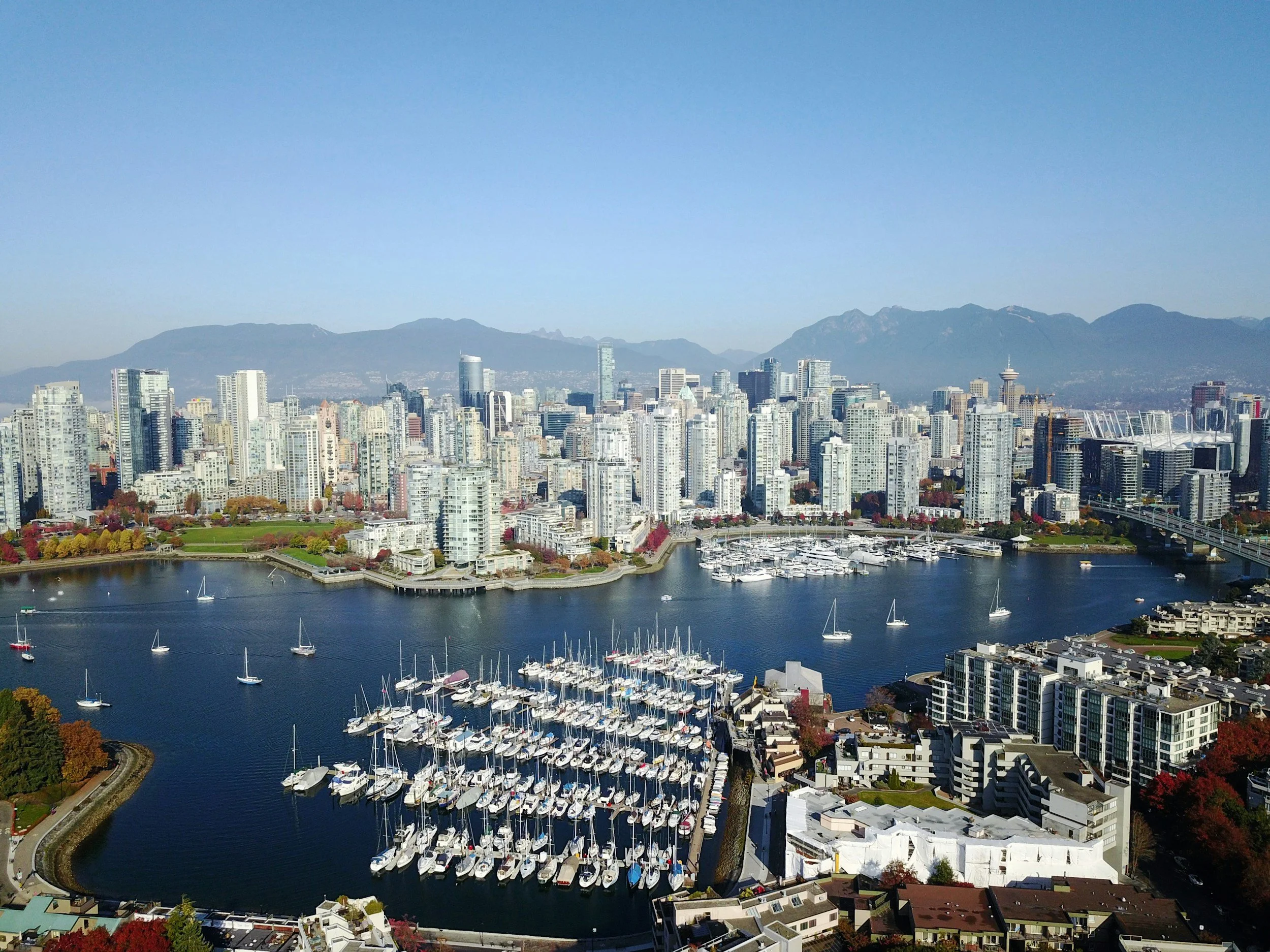
Vancouver is a hell of a beautiful place with a hidden, rotten underside.
Making amends in your steps to recovery.
I think regulating the construction and real estate market is key, as it is the endgame (ahem) in terms of the laundering trail, that's where the money is heading and if that is locked down a lot of that money will have to go elsewhere, Toronto perhaps, reducing the throughput in other areas. A beneficial owners registry is touted as an important measure against laundering, it certainly would be a boon, but if it isn’t given enough backing, and power or information isn’t verified and it's just a list of what people say, it will be a hollow victory. Case in point, see UK Companies House (7), which is quite frankly so bad it belongs in the Canadian story just to round it off as a complete mess. The UK government have announced plans to remedy the issues but I’ll believe that when I see it and search it. The UK is oft cited as having a very good AML framework but there are gaps, and Canada can learn from it - prevention over cure is the way forward for BC. It’s easier said than done, but it is very necessary for them to learn from their own and the mistakes of others if they want to implement a system that actually works.
Unexplained wealth orders (UWOs) were also proposed in the CMLBCRE report***, but again they need some real resource to be effective. This report is comprehensive and brings value in its data but is essentially academic - it provides figures that can be quoted but can't be verified. It contains a lot of valuable data sets and also states the obvious, but maybe that’s a good place to start seeing as the authorities and regulators have ignored the blatantly obvious for the last decade or so. The UK has made some moves with the UWOs but it took time, and their infrastructure is reasonable - UWOs are no good without some serious backing and clout behind them, just like anything else in the regulatory space. If ML investigations are to be carried out by the RCMP, they will need major funding and support for a dedicated unit.
The ideas are there, but whether the will is we will have to wait and see. As always the budget will be a huge barrier to success, the system is so messed up it needs a complete revamp from the regulator oversight to the operational process, it’s a massive task and scale is likely part of the reason it hasn’t been dealt with before. Calls for an inquiry should be considered but the scope should be wide, there is no need for an expensive and drawn out convolution covering the same points of the reports. There are problems, gaps and failures that have been identified for which the process to rectify can be started now, like when some of the casino procedure was changed post the first report - but it needs to be monitored continuously. A good idea would be to create a committee to ensure the implementation of changes and enforcement in the anti-financial crime space in line with these reports and also have them lead an inquiry into the whole picture, including the shipping and financial sectors.
I think the banks have missed a trick in this whole scenario and have been spared scrutiny as they weren't in the remit of the reports. They all need a visit from an external government auditor or panel or Judge Dredd maybe. We have a money laundering hotbed with numerous scandals and reports over the years but it’s still been ok for huge amounts of cash to be deposited. I’m struggling to get my head around how that has been acceptable. The FATF did a Canadian evaluation in 2016 and they stated some shortcomings but on the whole they deemed the regulation and controls to be robust on the whole. As has already been mentioned a dozen times by me and everyone, enforcement is the key. Let’s see what happens.
| Saying that Canada has been leading the fight against financial crime is like saying Donald Trump has been leading the fight for feminism.
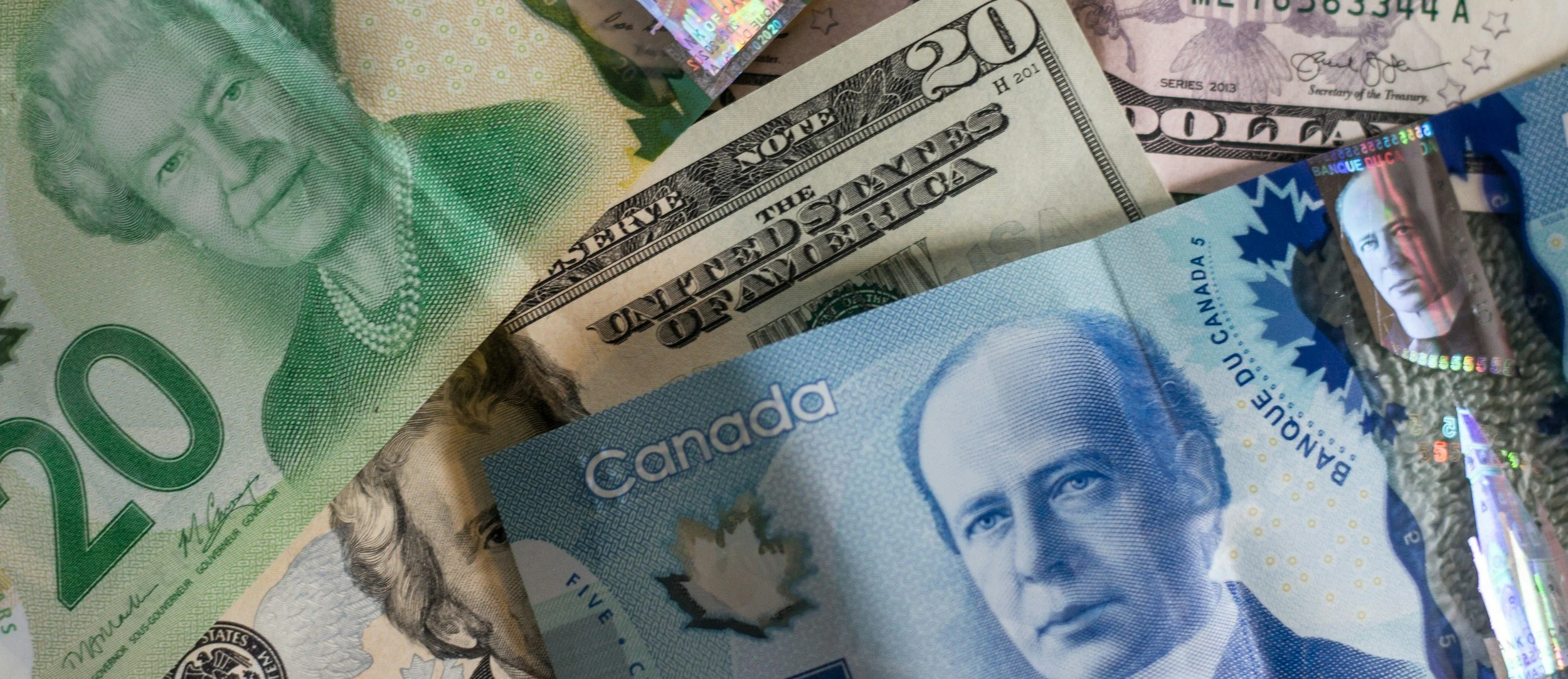
After the release of report 2, the President, I mean Prime Minister of Canada, Justin Trudeau, currently embroiled in his own corruption scandal (8), let the criminals know he means business - “This is a real and pressing problem for Canadians and it’s a problem around the world that Canada is going to continue to lead in the fight against.” Good one, saying that Canada have been leading the fight against financial crime is like saying Donald Trump has been leading the fight for feminism. The PMs person in charge of reading the report for him obviously didn’t read the same report as everyone else - the PM would probably say the same thing even if he had read it himself though - politicians eh, reliably gaseous. On the bright side, if Canada is currently leading the fight then my job is safe for the unforeseeable future. I will follow up with some ideas on what was missed and the bigger picture, but first I need to pop my head above ground so I don't get recruited as a narco money launderer, saying that I'm partial to a Lamborghini and I do love it here...
PART 3 - Money Laundering Vancouver Style - Omnishambles & Outburst.
BEAUTIFUL BRITISH COLUMBIA.
Let’s break that down - it is naturally Beautiful, it is a former British colony, and it is kind of like Columbia was back in the days of Escobar et al, loads of cash - aka, Beautiful Bring Cash. I think I nailed that. Is it the beginning of the end for that alternative acronym? It could be, but I think it’s highly unlikely. I think Vancouver belies its clean, trendy, progressive and modern lifestyle as quite evidently what has been behind much of the facilitation and development of that image has been dirty money. It may well be a place that was built with dirty money, or I may well be exaggerating but it doesn’t really feel like I am. This post is a short digression, it's about feelings and it's good to share. We all have feelings and it's required for my benefit.

At the end of the day it's about cold hard cash, and everyone wants to make a buck.
| In this case perhaps it wasn’t wilful blindness, maybe it was just plain old wilful kindness.
I have a few theories in regards to how this situation came to be. I’m looking at a psychological and behavioural perspective not a controls and regulation one. I'm just putting these out there;
Greed. Everyone has been making money, real estate agents, casinos, cars dealers, retailers/businesses great and small, personal trainers, masseurs, window-cleaners, especially window cleaners - but who has benefitted the most from the dirty cash flowing the veins of beautiful BC? That has to be the government. Taxes, natural resources, licenses, rent, visas, duties - but mostly taxes from an economic boom the likes of which it won’t see again. They knew things weren’t right, there was international pressure, internal turmoil, gang wars, and dirty money everywhere, but regulation and policing were often reduced and restricted. No port police in a port city with a $43 billion shipping industry, no resource to strengthen AML investigatory teams when gang crime catapulted, no realted action when Alberta created a construction regulator, and no care as to the locals being priced out of the market. Everyone knows you follow the money, but BC just let it flood in and never tried to stop it, it didn’t really need following - just investigating. Now there is outcry, reporting and inquiry - now everyone has made enough cash.
Gullibility. Maybe there was zero corruption and everyone was just enjoying the boom without ever realising that something was wrong. Maybe they did their best, and didn’t realise that Metro Vancouver was infested with crime and rotten to the core. I find that hard to believe but maybe the special advisor to a politician or two missed a key point in a report and maybe none of the politicians watched the news or read the papers or their internet was terrible so they didn’t get the required updates. Who knows? Or maybe it was that they thought it was all domestically generated funds because immigration has been so low, there was no indication of any inward capital flight or foreign cash flows. Ships are for shipping goods, why would anyone bring cash on a boat - we don’t need to waste time on that!
Geniality. The Canadian politeness and friendly nature is fantastic, it sometimes catches me off guard as I am used to the general English apathy that I so enjoy. It is possible that everyone in government, the banks, lawyers, notaries, regulators, casino managers, are all so nice that they didn’t have the heart to turn away the customers they were getting. Because as we all know, the customer is always right, right? In this case perhaps it wasn’t wilful blindness, maybe it was just plain old wilful kindness. They didn’t want to see bad in anyone, everyone deserves a chance, innocent until proven guilty and all that. That El Chapo seems like a nice fella, tips well, loves his wife and kids, and he looks after his mama.
They all start with G, because gee whiz am I confused?! I may have been a little sarcastic there, but you get the idea. Seriously it may have been a combination of all three, but that is no real consolation. What is the reason? What are the excuses? Who is responsible? How did this happen? There are a lot of unanswered questions. They have ordered an inquiry, I hope they get to the bottom of it and put some people in jail (yea, sure they will) and are able to rectify this omnishambles. I don’t believe in coincidence, there are too many oversights and conveniences for there not to have been some actual allowances, intentional oversight and corruption. Maybe I’m biased, but I just see so many glaring issues that it’s impossible not to be suspicious.
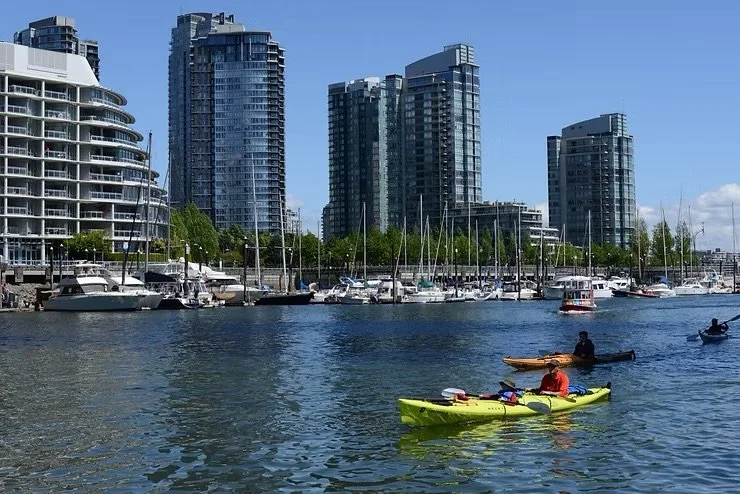
This is Vancouver, British Columbia - there could be contraband in those kayaks...
When I go into the absurd nature of it all, I get a bit worked up. And when I see things like this in report 2 - in the chapter on lawyers and notaries it actually states this, “Law enforcement cannot disregard crime committed by members of professional bodies, simply because they are professionals and their professional body can sanction behaviour. They must have the capacity and willingness to act upon criminal referrals.” Okay, just in case that wasn’t clear - to the police!!! The fact that there are such obvious statements is worrying - though the need for clarity is important - comments like the above give a good indication of where things are in beautiful BC.
I just had to get that off my chest, let the outburst occur. The thing that always bothers me and that is rarely mentioned is that often the laundered money isn’t from white collar crime or some rich person trying to avoid tax - it’s from the terrible side of us, the inhumane and cruel side of this modern world and all that we will do for money. The predicate crimes of people, arms and drug trafficking, prostitution, slavery, drug sales, scams, poaching and other horrendous acts are where this money is generated - that is what anti-money laundering is about - to make cleaning the money as difficult as possible and hopefully one day impossible.
There are victims out there because BC/Canada made it so easy, they enabled it and created a larger, more accessible market for dirty money, and that is not acceptable anywhere. Yea it happens in London, New York and Hong Kong, but these places at least try to fix it or pretend to try, and despite challenges they enforce their legislation (and make a show of it) when possible. I hope the provincial government with these latest reports and media outcry can change the acronym that I have modified to Brazenly Bring Cash back to Beautiful British Columbia, however it may take a hell of a long time until this thing is resolved so don’t hold your breath.
PART 4 |Money Laundering Vancouver Style - Off the beaten FINTRAC.
The name is a misnomer, it should be FINoTRAC, FINTRACtable or FinLIB - I won’t create acronyms as it will be entirely gratuitously negative and offensive. Yes I’m being a little harsh, but this is a result of and focused on the (lack of) work done in relation to the situation in British Columbia/Metro Vancouver - so it’s warranted criticism and the FIU is a big part of the conversation ( - the one I was having with myself). The Financial Transactions and Reports Analysis Centre of Canada (FINTRAC) is the financial investigation unit (FIU) for, that’s right, Canada.

What is an FIU? I hear you ask, actually most anti-financial crime peoples will know that, but for the lay, and clarity let’s cover it. The common definition of an FIU is;
“… a central, national agency responsible for receiving, (and as permitted, requesting), analyzing and disseminating to the competent authorities, disclosures of financial information:
(i) concerning suspected proceeds of crime and potential financing of terrorism, or
(ii) required by national legislation or regulation, in order to combat money laundering and terrorism financing.”
That’s good to know isn’t it - there’s a lot going on behind the scenes in the global fight against financial crime (not in BC obviously). The Egmont Group of Financial Intelligence Units is an informal network of 159 financial intelligence units, the above definition is penned by them, and aligns with the FINTRAC about us spiel (1), “FINTRAC is Canada's financial intelligence unit. Its mandate is to facilitate the detection, prevention and deterrence of money laundering and the financing of terrorist activities, while ensuring the protection of personal information under its control.” Except it historically hasn’t (not entirely it’s own fault) and presently doesn’t really do these things very well - actually I imagine they do protect personal information well.
This part 4 post was meant to wrap up the Vancouver model articles but as I was looking at the particulars in relation to key changes I want to see, it became apparent that this important FIU issue wanted a slightly deeper dive. A dressing down, to uncover the dressed up FIU it actually is. So here’s one angle on how it should work in theory; Bank ABC Ltd sees some unusual transaction activity on one of their accounts, they create a suspicious activity report (SAR) and send it to the their FIU, the FIU confirm receipt, and analyse the submission. They discover that two other SARs have been sent in the last week that show two accounts at other banks that are registered at the same address have also seen unusual account activity. They send the info to the their internal investigations team who contact the banks in question to gather further information. The FIU then compile a case and enough information and evidence to show that something illegal is going on, they advise all banks to freeze the accounts and arrest the individuals who are put in jail for many years.
That’s a simplified look at one of the basic functions of an FIU. It’s pretty neat when it works and can get very complex (see end of post - Russian FIU investigation), hence the point of a well resourced, empowered, globally connected entity with national oversight. Leading the way are FinCEN (Financial Crime Enforcement Network), the US FIU, they have significant resource and are particularly effective, leading the way with a comprehensive regime, and a good number of scalps to show for it - obviously it’s an ongoing battle and each country has their own challenges. In comparison, the way FINTRAC works is that once reports are with them they are analysed and then stored until requested by the provincial parties investigating criminal ongoings.
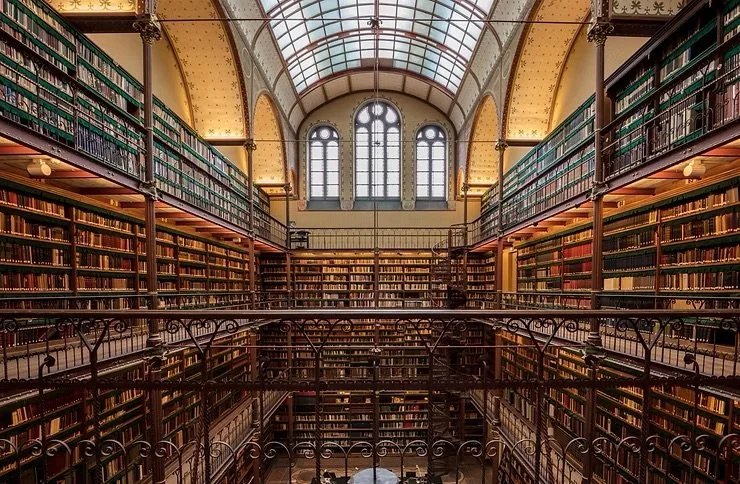
This is how I imagine all the reports are stored at FINTRAC / Image: Michale D Beckwith / Unsplash
|Is FINTRAC in essence a glorified library?
Is FINTRAC in essence a glorified library? I hear you ask, good question. Well in my eyes they don’t actually investigate to a conclusion so maybe they shouldn’t be called a financial investigation unit (though not all FIUs have law enforcement powers - I think they all should to an extent). Neither does the system have the required infrastructure, or resources to deal with the threat level accordingly and therefore are not fully operational - hence in my opinion they are not the bonafide FIU that Canada needs (2).
What does FINTRAC do? From what I gather they;
- receive reports on suspicious activity from all entities that are required to report.
- disseminate information to police and relevant authorities when required
- collaborate with & support other FIUs
- respond to requests for information
- they can issue fines up to a max of CAD 1m
- deal with regular FIU mandated tasks nationally and globally (meetings, training, etc).
They have not or do not;
- issued a fine in the last 3 years as they were reviewing their policy (?!)
- tried to improve the state of national AFC ongoings (and are more focused on external matters)
- allow law enforcement to work on their sites
- have the power to investigate fully / this is done locally via police.
- have the power to freeze assets.
Apparently their penalising powers have been restored now (Feb 2019 - 3), but what a state of affairs. The banking regulators in Canada are OSFI and FCAC, prudential and consumer respectively. There has been little action from these entities that I have seen evidence of that is constructive in preventing or effective in punishing financial crimes. So apparently the Office Of The Superintendent Of Financial Institutions (OSFI), and FINTRAC can each issue fines up to $1m, and the Financial Consumer Agency of Canada (FCAC) can issue half that, this is a little weak considering the kind of fines I like seeing, either way I don’t think they’ve been up to much in that sense. Again it’s the enforcement that’s lacking and now looking at the wider picture with all these other authorities and agencies involved, it’s clear that the issues are systemic.
There have been calls for banks to be audited and investigated in relation to profit ‘gouging’ and lack of transparency. The same article from June 2017 states, “Democracy Watch says the FCAC has issued just $1.7 million in fines to banks since 2001. By comparison, Britain's Financial Conduct Authority (FCA) has issued penalties totalling more than US$3 billion since its creation in 2013, while in the U.S. the Consumer Financial Protection Bureau (CFPB) has issued more than US$5 billion in fines since 2011” (4). And lets not get into all the fines the BoE, SEC, and US Treasury/OFAC have dished out over the years (See Chart - 5). In 5-10 years I hope to see a similar chart relating to action the Canadians have taken to clean up the dirty dealings in their finance, casino and real estate sectors. Of course they have to be able to investigate, enforce and prosecute for that to happen.
Reports, Retorts, and last Resorts.
“The number of reports received by FINTRAC is staggering. In 2016, it received over 27 million financial transaction reports across all sectors. With respect to casinos, it received 172,289 CDRs alone. FINTRAC utilizes sophisticated software to analyze submissions from reporting entities and ultimately disseminates the information in vetted form to designated law enforcement and security agencies.” - Report 1. Now with that kind of intel, there should be investigations, arrests, court cases, convictions, and all that financial crime fighting frenzied media sensationalism that we like to see in the news. I haven’t gone into BC specifics but there isn’t anything stated about BC investigations in the FINTRAC annual report, which does point at recent successes etc.
It seems the conversion rate for disclosures of information from FINTRAC into actionable prosecutions is quite low, and that may have to with the resources that are available on the policing side. There is a disjunct here, I believe the whole process of analysis, investigation, indictment, asset freeze and should be within the purview and power of the FIU - as it very often is, as per UK NCA and US FinCEN. As I understand it FINTRAC do good work in terms of analysis, and the quality of the disseminations is great, as is the support they provide other FIUs and entities. So this isn’t a case of lack of expertise but structural and organisational matter in relation to their mandated duties, and the process of dealing with reports they receive.
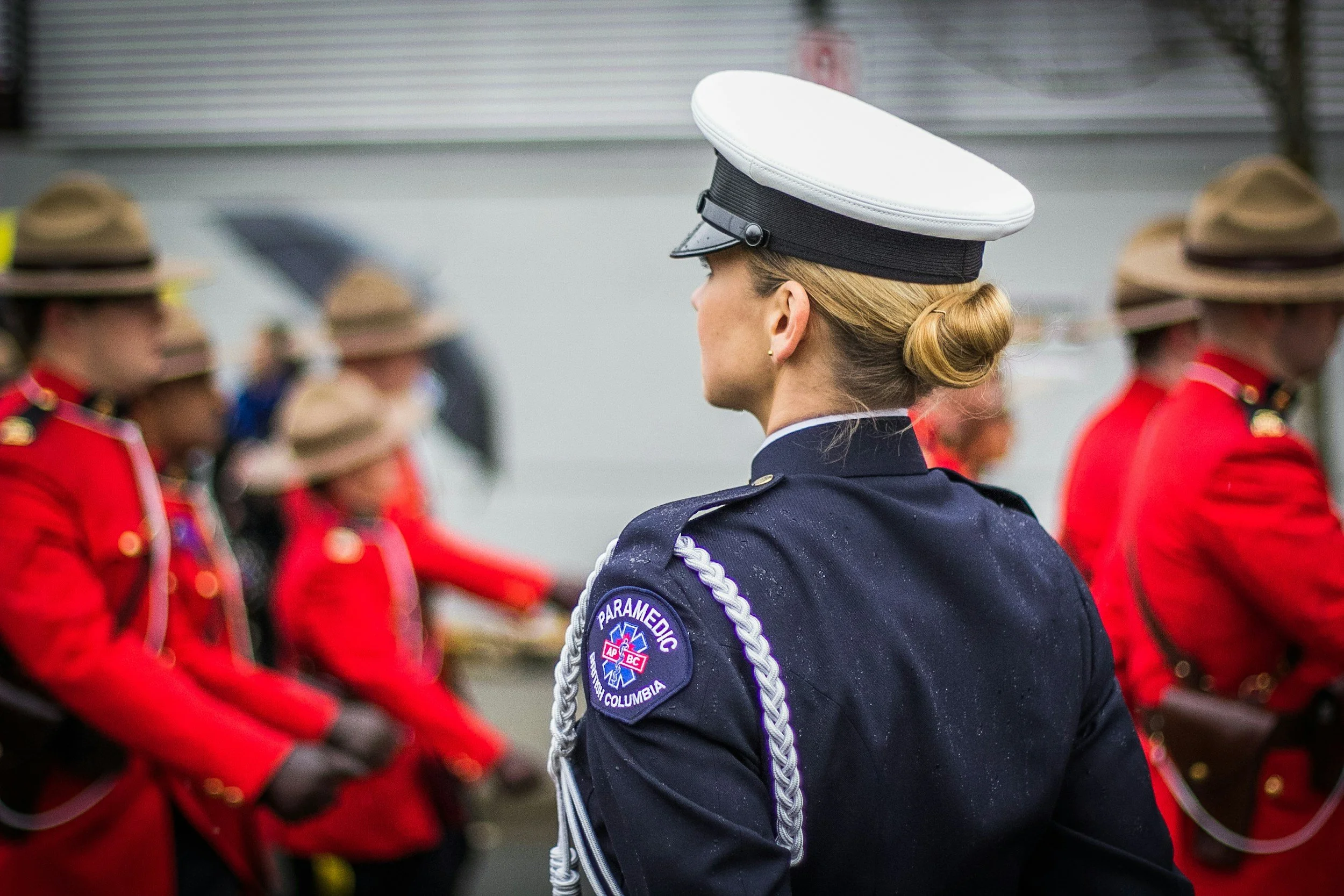
Can the Royal Canadian Mounted Police (RCMP) save the day - they need the one from that show 'Due South' from way back when, he was a true hero / Image: Nic Amaya / Unsplash
On the kind of bright side, for the 2019 budget announced in March this year, the Canadian government announced a pilot program for the optimistically-named ACE Team, or Anti-money laundering action and co-ordination team. I’m not exactly sure how that comes out as ACE, but whatever. The initiative hopes to combine the expertise and resources of the RCMP, FINTRAC, Canada Revenue Agency, and federal justice department prosecutors (6). I have previously bashed the lack of policing and interest in the shipping industry and trade based money laundering - involving import/export of goods and the illicit transfer of value/assets using this sector. This is also to be addressed by FINTRAC and Canada Border Services who will collaborate to create a “Trade-based Money Laundering Centre of Expertise” - whatever one of them does, I don’t know - sounds like another library.
These collaborations are a key step in the larger battle, but what is happening is potentially a continuation of the siloed and disjointed approach that has hindered the process thus far. Why not open FINTRAC to become the defacto investigations entity and allow law enforcement some room to manoeuvre internally, encompassing asset freezing and extended powers. If the above proposals materialise, it is moving the bar further away from the traditional FIU set up, a set up which can work well and is logical. The reports are flowing in, so in a sense that side of the process is working - but shipping the information back out to external regional entities doesn’t make sense. Sure regional FINTRAC offices (as there are now) are necessary, but they need to be the tentacles of one organism not entirely separate cells. They are throwing money at the problem, creating new structures but they are essentially building on wobbly foundations.
“Most large land developments and commercial purchases in B.C. are handled by lawyers. Notaries handle many residential real estate transactions. Ironically, lawyers and notaries may represent parties to the same real estate transaction, with one side not reporting to FINTRAC and the other reporting. It is hard to rationalize this irony within the same transaction.” - Report 2. They need lawyers to report to FINTRAC, that’s all there is to it, if they don’t, they’ll never be on top of the problem. The Law Society that has lobbied against reporting (successfully), and is a an authority in the ector, needs to be brought in on reporting or squashed altogether (in this context).

It's all shadows and silhouettes behind the scenes of financial regulation in Canada
In the bigger picture, if there isn’t something being worked on already, a real key to this revamp working, and a consideration for the future ACE Team and the other one mentioned above, is a focused Canada-China bi-lateral enforcement effort. The Chinese have cracked down significantly on corruption and though they have their own methods and motivations, I’m sure they would like to lock down on the criminal elements circumventing their controls, evading tax and causing harm to their economy. Of course this rolls into the realms of politics and other ongoing matters such as the Huawei scandal that has Canada stuck in between China and the US. That’s all part of the game I guess, but they’ll need to think of something as it's likely that if ACE actually get to do some investigating they are going to appreciate some cooperation from China, who unsurprisingly, are not part of the Egmont Group.
It’s reasonable to say that if the government, both provincial and national, started cracking down on banks, casinos and illicit flows in real estate, actually prosecuting and levying meaningful fines/penalties that they might actually be able to make some of the money back that they lose from shutting the dirty money out of the system. Canadian regulators need their powers increased and to take the lead from the other global regulatory authorities; take a stand, crack the whip and don’t back down for love nor money (obviously).
Below are some snippets from an example taken from the Egmont Group 2017 Annual Report (7) showing a Russian investigation which their FIU (Rosfinmonitoring) got to the bottom of. Don’t ask me to break it down, I have no idea what the diagrams are but it looks impressive, like a job well done! Yes Canada, in this case you are the bad guys - so do something about it and maybe you’ll get out of the naughty corner and into a future annual report as a StAR* pupil.
* StAR = Stolen Asset Recovery, a World Bank initiative - https://star.worldbank.org/
PART 5 | Money Laundering Vancouver style - The Silence of the Lambos.
I’ve been back in the UK since Wednesday, what's this Brexit everyones on about!? I was in Vancouver aka Van city for over a month so am really struggling to adjust, and specifically get to sleep - I think my body-clock is broken. I am therefore restless and tired and not really fit to write. There have been sleepless nights, and when I do sleep - there are vivid dreams, nightmares even, and there is fear though there are no clowns, there are however beneficial owners from sanctioned countries. I will tell you about these dreams another time but for now let’s wrap-up the real nightmare that is the Canadian/British Columbian financial crime landscape.

This is a Lambo and behind it is a private jet - fyi Canada, criminals like these things / Image: Craventure Media / Unsplash
So the title Silence of the Lambos is a clever pseudo-contraction of, 'Cleverly punning/using the name of a popular movie to reinforce the need for enforcing controls in relation to money laundering which would stop criminals buying Lamborghinis (amongst other luxurious things) which are also known as Lambos, (the Lambo used here and the use of Lambo (in this context) is as a symbol for luxury and to power a pun, it is in no way implied that Lambos are made for criminals or that they should be silenced in general).'
Anyway, I’m going to point out a few things that need to be addressed and give a snip of info on each. There is a fair bit to cover so will keep it brief, in line with my lethargy and quite frankly annoyance with the whole affair. It has become clear that one of my favourite places on earth, is equally attractive to criminals trying to launder money - this does hurt my feelings somewhat, as it does for the locals. While in many places Moneyland is tucked away underground with entrances hidden in fridges and wardrobes, in Van city they are regular looking doors to Moneyland, those of casinos, banks and real estate agents.
And so, on to;
Shipping
- C$43billion industry, you think cold hard cash isn’t coming in via the ships, you are wrong.
- A Peter German & Associates report on Trade Based Money Laundering would be nice.
Banks
- They obviously haven’t been doing their job when it comes to TM or KYC.
- Stop taking cash from HVDs unless they bring a reasonable KYC/AML info with them.
Underground Banking / MSBs
- Fei-Shan/Hawala
*if there are those of significant size, they should regulated to some extent.
*as this process can’t really be stopped, general improvement and lockdown in AML due diligence across the financial sector needs to be in place to stop dirty money getting into the system, even if it gets into the country.
- MSBs should be audited by regulators and;
- Banks should have reliance agreements with MSBs which are reviewed regularly to ensure compliance.
Notaries/Lawyers
- Get Lawyers reporting to FINTRAC now!
FINTRAC
- give them full on FIU superpowers, now!
Real estate
Regulator - create a regulator like in the province of Alberta, Canada - one that has the power to fine and ban.
Agents/Firms/Developers - make them accountable for KYC and AML due diligence.
Casinos
- Continue working on shoring up controls and punish current regulators freely.
- Move regulation of casinos from British Columbia Lottery Commission to neutral party.
- Transition to no-cash systems.
Luxury Cars (and other high value dealers)
Auto export - get rid of tax rebate on exports and/or introduce increased AML due diligence measures if a vehicle is noted as a future export.
Dealers - include in reporting and add laws relating to cash purchases.
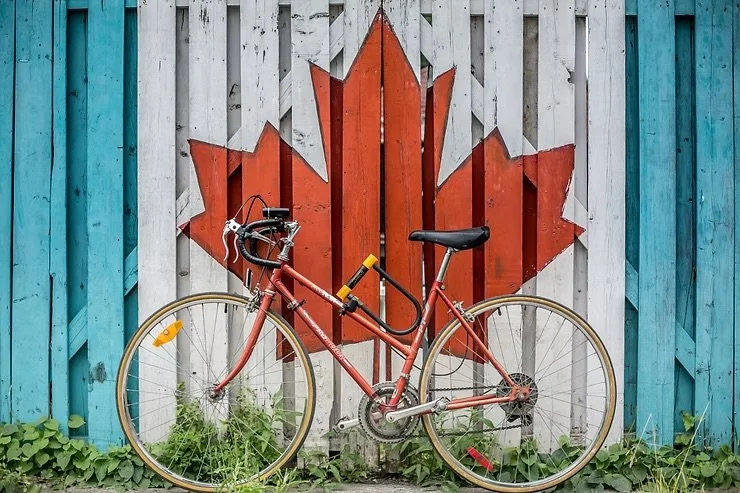
I want criminals to be reduced from Lambos to Bicycles, with the bonus of positive environmental side effects / Image: Ali Tawfiq / Unsplash
Crypto
- banks should apply limits on transfers, and not allow transfers unless the exchange has solid KYC/AML programs (some do that already or don't do business with exchanges full stop).
Horse Racing
- Trainers and horse owners should be subject to AML due diligence.
- Transition to no-cash system.
- it’s not cool is it, so just stop it. Horses have feelings too, see Bojack Horseman.
Policing
BC Port Police - get some, now!
Robocop - create a robocop.
RCMP / Proposed special investigation units - Make sure it happens and has sustainable funding, resource and support where and when it counts.
Government
- Companies House but better - public
- Real Estate Register - private
- Unexplained Wealth Orders - seek and destroy.
- Make any inquiries count - remove corrupt +/ non-compliant officials
- Move regulation of casinos from British Columbia Lottery Commission to neutral party.
- make Canadian Geese less noisy.
- make Canada Goose stop using fur in their products.
“May we get what we want, may we get what we need, but may we never get what we deserve.”

It's time for Canada to punish, or maybe be punished
That’s not too much to ask is it, though I know it is and I definitely missed some bits. I, before I die would like to celebrate a serious Canadian prosecution of money laundering, it’s now officially on my, ‘I would like to see’ list, alongside Kim Jong Uns’ diary, Putins real net worth and an app that cures hangovers. In line with that, there is an old Irish toast, “May we get what we want, may we get what we need, but may we never get what we deserve.” I imagine the Moneylanders using this and it bothers me (I'm always semi-furious), but I think we can apply it here so it’s said by the those in charge of fighting financial crime in Canada.
“May we get what we want, may we get what we need, but may we never get what we deserve.” What they want and need I have covered above to a point, what they deserve at the moment involves a visit to a CIA black site. Hmmm, maybe FinCEN or Egmont could create a black-ops division to punish other FIUs/lacklustre fincrime fighting efforts. I’ll lobby for that but until then it’s the standard political magnum opus of fingers crossed and hope for the best.
Regards,
Alvin.
#moneylaundering #dirtymoney #rcmp #vancouver #vancouvermodel #Moneyland #Canada #aml #antimoneylaundering #kyc #realestate #financialcrime #luxurycars #crime #narcos #organisedcrime #dirtymoney #thedirtstring #omnishambles #rcmp #canada #britishcolumbia
INTRO
DIRTY MONEY, An Independent Review of Money Laundering in Lower Mainland Casinos conducted for the Attorney General of British Columbia - https://news.gov.bc.ca/files/Gaming_Final_Report.pdf
PART 1
Reference, Links and Related Articles.
2. https://newtobc.ca/wp-content/uploads/2013/07/Vancouver-Immigrant-Demographic-Profile-2018.pdf
2019 Vancouver Population stats -http://www.demographia.com/dhi.pdf
https://news.gov.bc.ca/files/Gaming_Final_Report.pdf
https://news.gov.bc.ca/files/Dirty_Money_Report_Part_2.pdf
https://home.kpmg/cn/en/home/contacts/z/cathy-zhou.html
http://www.fatf-gafi.org/media/fatf/content/images/MER-China.2019-Executive-Summary.pdf
PART 2
Reference, Links and Related Articles.
Report 1 - https://news.gov.bc.ca/files/Gaming_Final_Report.pdf
Report 2 - https://news.gov.bc.ca/files/Dirty_Money_Report_Part_2.pdf
*** https://news.gov.bc.ca/files/Combatting_Money_Laundering_Report.pdf
1. https://www.harpercollins.com/9780062663085/hunting-el-chapo/
3. http://www.fatf-gafi.org/media/fatf/documents/FATF%20Standards%20-%2040%20Recommendations%20rc.pdf
4. https://www.40listings.com/REBGV/most-expensive/houses/west-vancouver
6. https://www.thestar.com/news/canada/2019/04/25/bc-says-its-money-laundering-reforms-could-push-dirty-money-to-toronto.html
7. https://www.globalwitness.org/en/campaigns/corruption-and-money-laundering/anonymous-company-owners/getting-uks-house-order/
8. https://www.cnn.com/2019/03/06/americas/canada-politics-explainer/index.html
https://www.bcgreens.ca/money_laundering_timeline
PART 3
Reference, Links and Related Articles.
Report 1 - https://news.gov.bc.ca/files/Gaming_Final_Report.pdf
Report 2 - https://news.gov.bc.ca/files/Dirty_Money_Report_Part_2.pdf
https://news.gov.bc.ca/files/Combatting_Money_Laundering_Report.pdf
PART 4
Reference, Links and Related Articles.
1. http://www.FINTRAC-canafe.gc.ca/intro-eng.asp
2. https://www.coe.int/en/web/moneyval/implementation/fiu
3. https://www.bnnbloomberg.ca/FINTRAC-completes-penalty-review-clearing-way-to-issue-fines-again-1.1211032
4. https://www.huffingtonpost.ca/2017/12/06/canadian-banks-accused-of-gouging-after-clocking-42-billion-in-profit_a_23299071/
6. https://globalnews.ca/news/5069141/2019-budget-money-laundering/
7. https://www.egmontgroup.org/sites/default/files/filedepot/EGAR_2016-2017/Egmont%20Group%20Annual%20Report%202016-2017.pdf